
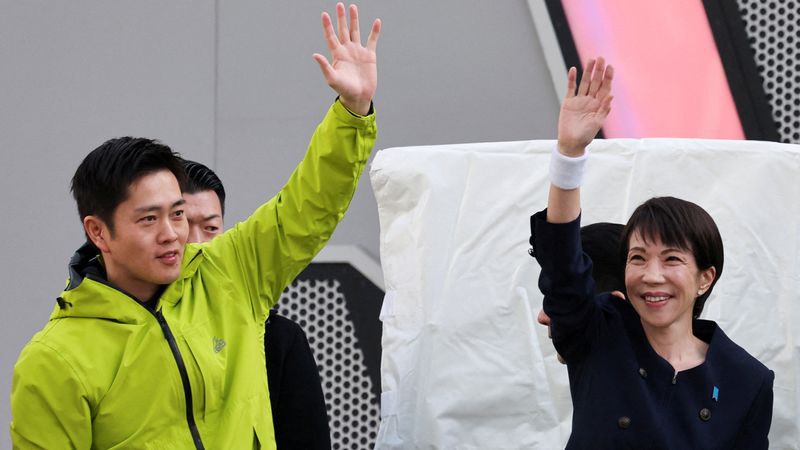

Japan’s junior coalition head warns against political meddling in BOJ policy
By Takaya Yamaguchi and Leika Kihara
TOKYO, Feb 16 (Reuters) – Japan’s government must avoid meddling in monetary policy and focus on steps to build an economy strong enough to weather the potential pain from any further interest rate hikes, the leader of the ruling coalition’s junior partner told Reuters.
Japan must also proceed with a two-year suspension to the 8% sales tax on food at the earliest date possible and consider tapping its huge foreign exchange reserves as among sources of revenue, said Hirofumi Yoshimura, who heads the Japan Innovation Party, or Ishin, which is a coalition partner of Prime Minister Sanae Takaichi’s Liberal Democratic Party. Yoshimura’s comments appeared to play down the view held by some analysts that Takaichi may back down on her pledge to roll out the plan sometime during the fiscal year beginning in April.
“As for rate hikes, that’s something the BOJ ought to decide. Politicians shouldn’t intervene. The BOJ would make a decision looking at various market environments and through dialogue with markets. I think the government shouldn’t meddle in detail,” Yoshimura said in an interview on Sunday, when asked about the possible timing of the next rate hike.
“If the BOJ were to raise interest rates, it might cause some pain such as through (higher) mortgage rates. But when looking at the current weak yen, it’s possible the central bank could hike. We therefore need to create a strong economy, such as by using the budget, so it can cope with the impact,” said Yoshimura.
SALES TAX CUT COMING
The remarks suggest the ruling coalition will seek to underpin growth with fiscal policies and avoid applying explicit pressure on the Bank of Japan (BOJ) to delay interest rate hikes that could help keep unwelcome yen falls at bay.
Japan currently applies an 8% consumption tax rate on food and 10% for other goods.
After her party’s historic election win on February 8, Takaichi renewed a pledge to suspend by two years the levy on food sales to cushion the blow to households from rising living costs – a move that will leave a huge hole in state revenues and worsen Japan’s already tattered finances. She said the government will aim to roll out the tax suspension by fiscal 2026, after debating details such as the timeframe and funding in a meeting of ruling and opposition parties.
“It’s possible to get this done during the fiscal year 2026. We need to get this done at the earliest date possible,” Yoshimura said, reiterating Takaichi’s call to seek funding through non-tax revenues as well as cuts to wasteful spending and subsidies.
Leave a Comment
Your email address will not be published. Required fields are marked *