Trump says Nvidia can sell H200 chips to China, but nothing is guaranteed
On Monday, President Trump announced via Truth Social that he will approve the sale of Nvidia’s (NVDA) H200 chips to certain companies in China and other countries.
The move is a positive for Nvidia, which has been lobbying for the administration to approve the sale of more powerful chips to the country for months.
But the response from investors and Wall Street more broadly has been rather muted. That’s because, as Deepwater Asset Management managing partner Gene Munster put it, this all feels a bit like déjà vu.
In April, the US banned the sale of Nvidia’s H20 chips to China, before approving exports of the processors in July. But instead of buying them up, China balked, claiming that the chips could pose a security risk to local firms. The general thinking is that the maneuver was meant to push the Trump administration to let Nvidia and its rivals ship newer, non-downgraded chips.
And there’s no guarantee the country won’t do the same thing in an attempt to get Nvidia’s current top-of-the-line systems — the H200 is two generations behind the current Blackwell-based B300.
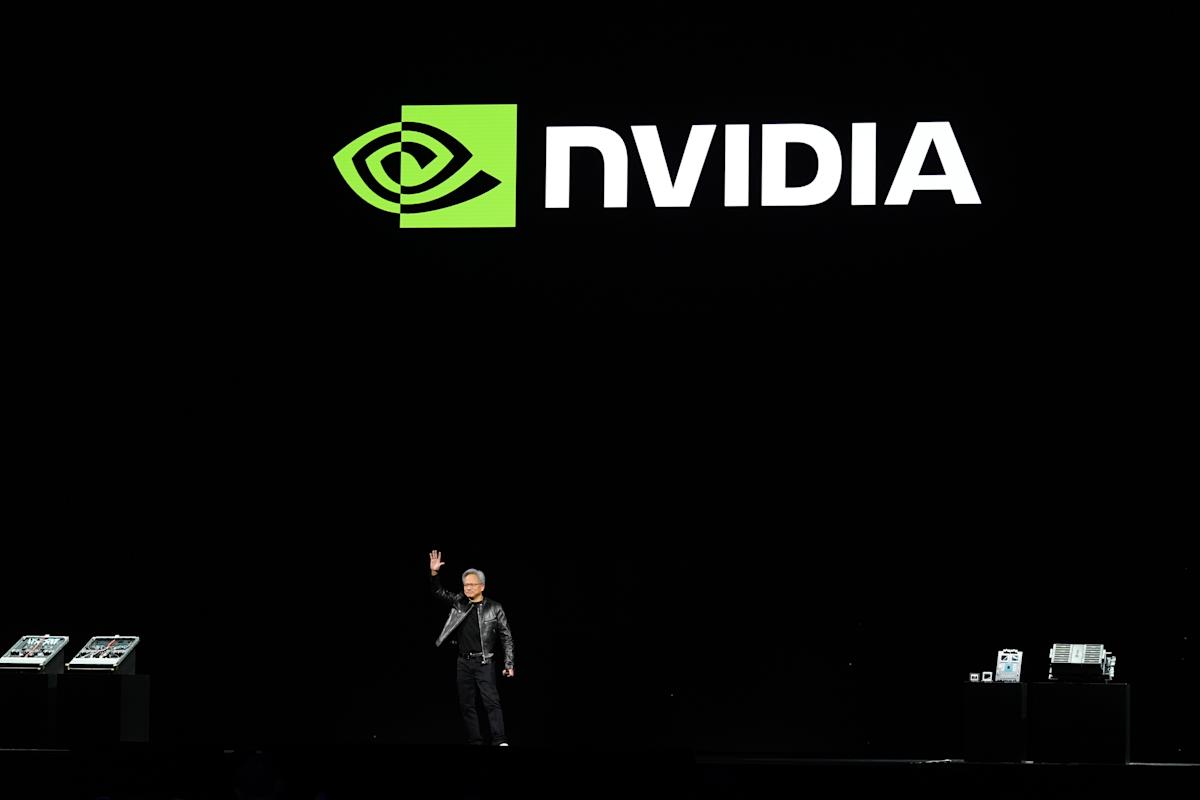
Nvidia CEO Jensen Huang presents a Grace Blackwell NVLink72 as he delivers a keynote address at the Consumer Electronics Show (CES) in Las Vegas, Nevada on January 6, 2025. (Patrick T. Fallon / AFP) ·PATRICK T. FALLON via Getty Images
There’s similarly no telling whether the US would halt sales of the chips as a means of retaliation against China if the countries’ ongoing trade negotiations go south.
“Even if [an agreement gets] approval, it’s been clear that this has been a bargaining job, and it could get turned off anytime soon,” Munster explained.
“That’s like 101 of investing … you want to sleep well at night. And this is the exact opposite. You’re checking the time every hour here because you just don’t know if we’re on again, off again.”
And then there’s the question of whether members of Congress will attempt to block shipments of H200s and other high-end chips. Critics have long argued that China could use US chips to train AI systems for military uses.
The battle to get back into China is well worth it for Nvidia from a financial perspective. CEO Jensen Huang has said the country represents a total addressable market of some $50 billion.
And those projections were based on the company’s reduced chips. More powerful GPUs could net a larger chunk of AI sales. The only downside for Nvidia? Trump says the AI giant, and rivals, will have to pay the administration a 25% cut on the sale of chips destined for China. That’s up from Trump’s originally planned 15%.
Still, even with that 25% haircut, sales to China would benefit Nvidia.
NVIDIA CEO Jensen Huang speaks on how AI infrastructure and AI factories that generate intelligence at scale are powering a new industrial revolution, at Washington Convention Center, Tuesday, Oct. 28, 2025, in Washington. (AP Photo/Manuel Balce Ceneta) ·ASSOCIATED PRESS
“They’re going from zero at this point, so anything above zero is positive,” TECHnalysis founder and chief analyst Bob O’Donnell told Yahoo Finance. “Selling any chip in any quantity is a step up.”
Beyond immediate revenue, Nvidia would also benefit from shipping its chips into China by getting more AI researchers and developers to use its CUDA software platform, William Blair analyst Sebastien Naji wrote in a note to investors Monday evening.
CUDA allows customers to take full advantage of Nvidia’s chips for various AI processing needs, which also helps keep developers hooked on Nvidia’s products. That, Naji writes, could help offset some of the increased competition from China’s homegrown chip companies, including Huawei.
That’s all if China allows the sales to move forward. In his Truth Social post, Trump said Chinese President Xi Jinping responded “positively” to the news about the H200 chip, but there are still too many unknowns about whether the sales will come to pass and, if they do, how long they’ll continue.
Xi has been pressing Chinese tech companies to use domestic chips for their AI needs to ensure they don’t become dependent on US technologies. But experts say China’s chips are still behind Nvidia’s latest and greatest in terms of performance.
“I’m just surprised China’s being positive about it, because they were just saying no … only use China-made chips. And it seemed like they were going to really stick to that,” O’Donnell said.
“And so it seems odd that they will all of a sudden not stick to it. So it’s a little confusing.”
Even if all goes well between the Trump administration and China, members of Congress could still seek to stop chip shipments to the country. A number of lawmakers have raised concerns that selling advanced GPUs to China could give the country a leg up militarily by helping it develop new, more powerful AI algorithms.
According to the Wall Street Journal, new chips shipped to China will have to be routed from Taiwan, where they’re manufactured, to the US for a national security review before being sent to their final destination.
It’s unclear, though, if that will be enough to win over wary legislators.
Ultimately, investors may not begin to feel certain about Nvidia’s fate in China until several months after the first chips land in the country. If they’re ever shipped.
Sign up for Yahoo Finance’s Week in Tech newsletter. ·yahoofinance
Email Daniel Howley at dhowley@yahoofinance.com. Follow him on Twitter at @DanielHowley.



Leave a Comment
Your email address will not be published. Required fields are marked *