

China’s LandSpace gears up to take on Elon Musk and SpaceX
HUZHOU, Dec 29 (Reuters) – China’s rocket startup LandSpace has made no secret about drawing inspiration from Elon Musk’s SpaceX.
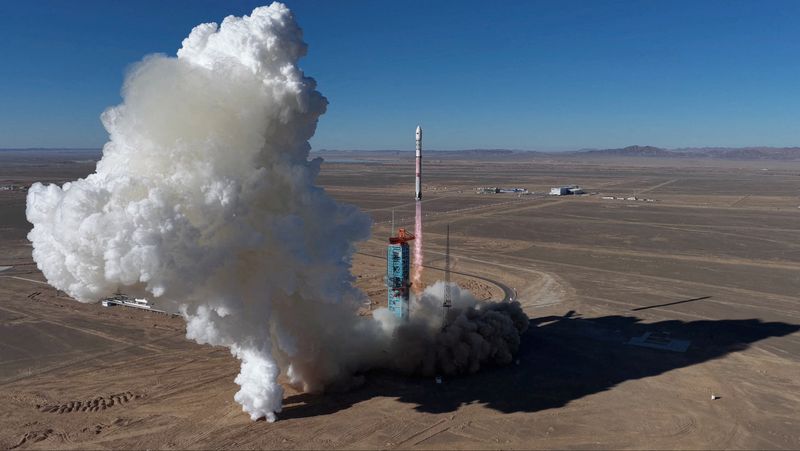
Earlier this month, the Beijing-based firm became the first Chinese entity to conduct a reusable rocket test. That put SpaceX on alert and LandSpace is now preparing to go public to fund its future projects, just as its bigger and far more successful U.S. rival considers an initial public offering of its own.
Even though LandSpace’s Zhuque-3 rocket test ended in failure, its aspiration to become second only to SpaceX in reusable rockets is providing a fresh impetus to China’s space industry, which has long been dominated by risk-averse, state-owned entities.
“(SpaceX) can push products to the edge and even into failure, quickly identifying limits and iterating,” Zhuque-3 chief designer Dai Zheng told state broadcaster CCTV after the rocket’s inaugural flight.
Dai said his decision in 2016 to join LandSpace and leave the China Academy of Launch Vehicle Technology, the country’s main state-owned rocket developer, was partly motivated by SpaceX’s focus on reusability and his desire to create a Chinese equivalent.
LandSpace’s focus on giving China its own low-cost launch option similar to SpaceX’s flight-proven reusable rocket Falcon 9 will play a key role in Beijing’s plans to build up 10,000 satellite constellations in the coming decades.
“Falcon 9 is a successful configuration that has been tested by engineering,” Zhuque-3’s deputy chief designer Dong Kai said in a podcast interview last week. “After studying it, we recognize its rationality; this is learning, not imitation.”
“Calling (Zhuque-3) a ‘Chinese Falcon 9,’ I think, is a very high compliment.”
Its startup culture and mimicking of SpaceX has already initiated a paradigm shift in China’s space industry.
China’s state-led space programme has historically been allergic to failed launches, in contrast to SpaceX and other Western firms that regularly broadcast their mishaps.
But earlier this month, state media covered China’s first two failed attempts at recovering a reusable rocket, with the second launch coming from a state-owned firm, just three weeks after Zhuque-3’s maiden flight.
LandSpace also opened its engine factory floor to Reuters this month, allowing foreign media to take a peek at one of its core assets for the first time.
After opening up the space sector to private money in 2014, which spawned several startups including LandSpace, Beijing is now looking to help leading domestic players tap into capital markets by making it easier for them to pursue IPOs.
Leave a Comment
Your email address will not be published. Required fields are marked *