For years, energy experts have predicted that natural gas will be the only fossil fuel that will see significant growth in its share in the global primary energy mix in the coming years, thanks to its role as a “bridge fuel” due to a lower emission profile compared with coal and oil as well as flexibility for grid stability, especially with increasing demand in Asia and as a backup for renewables.
Natural gas is poised to reshape Africa’s future, offering transformative pathways for countries to earn export revenues and achieve domestic industrialization. However, the continent’s traditional gas hubs, namely Egypt, Algeria, and Libya are expected to gradually take a backseat with sub-Saharan Africa–home to more than 70% of the continent’s recoverable resources–expected to drive much of the expected output growth.
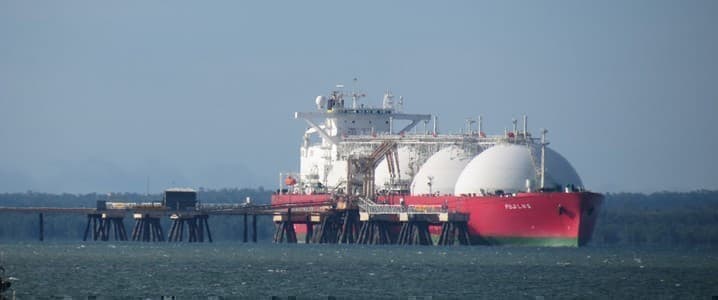
Africa’s new gas frontier will be dominated by Nigeria’s “Decade of Gas,” Senegal-Mauritania’s cross-border hubs, Mozambique’s FLNG buildout, and Tanzania’s long-awaited LNG framework. Indeed, LNG exports from sub-Saharan Africa are forecast to surge by nearly 175% to hit 98 billion cubic meters (bcm) per year in 2034 from 35.7 bcm in 2024.
Launched in 2021, Nigeria’s Decade of Gas is a national initiative that aims to leverage the country’s vast natural gas reserves (over 200 trillion cubic feet) to transform the economy, boost industrialization, reduce energy poverty, and increase exports by 2030. The initiative has triggered crucial reforms, most notably the passage of the landmark Petroleum Industry Act (PIA) 2021, which aims to modernize the sector, attract investment, and provide a clearer regulatory framework.
And, it appears to be working: the Nigerian government recently announced that over $8 billion in Final Investment Decisions (FIDs) for gas projects have been unlocked within the last 18 months, indicating growing investor confidence after recent executive orders and reforms.
Related: Where are The World’s Rare Earth Minerals Located?
It has also facilitated the development of several important infrastructure projects, including the 614km Ajaokuta-Kaduna-Kano (AKK) gas pipeline, the Nigeria LNG (NLNG) Train 7 project, and the OML 53 Kwale Gas Gathering facility, which has been successfully commissioned. Under the initiative, Africa’s leading oil producer has witnessed significant growth in demand for Liquefied Petroleum Gas (LPG) and Compressed Natural Gas (CNG), thanks to government policies (like the autogas policy and National Gas Expansion Program) pushing for wider adoption in transportation and industry.
Nigeria’s West African peers, Senegal and Mauritania, are jointly developing the Greater Tortue Ahmeyim (GTA) gas field. GTA is a massive, cross-border offshore natural gas field on the maritime border of Mauritania and Senegal, developed by BP Plc (NYSE:BP) and partners Kosmos Energy (NYSE:KOS), PETROSEN and SMH to produce LNG. GTA holds significant gas reserves, estimated at over 15 trillion cubic feet (Tcf) of potentially recoverable gas, with some estimates putting the total basin resource potential even higher. BP announced first gas in January 2025, followed by first LNG production and the first export cargo in April 2025, turning Mauritania and Senegal into LNG exporters. Phase 1 is expected to reach its full production potential of approximately 2.3 million tonnes of LNG per year (mtpa) once fully commissioned, which is currently on track. Phase 2 aims to add a further 2.5-3.0 mtpa of capacity, but the Final Investment Decision (FID) is still pending. Construction for Phase 2 is currently expected to start in January 2028.
Meanwhile, Mozambique is well on its way to becoming one of Africa’s natural gas and LNG giants, with total recoverable gas reserves estimated at over 150 Tfc, enough to establish it as a global energy hub. French oil and gas giant, TotalEnergies (NYSE:TTE), is getting ready to resume work on its giant LNG project in Mozambique, even as an Islamist insurgency in northern Mozambique continues with fresh attacks displacing tens of thousands of people in recent weeks.
Total abandoned the project with a liquefaction capacity of 13.1 million metric tons per year four years ago due to insecurity. With a 26.5% stake, Total is the main operator of the $20B LNG project, making it Africa’s largest private investment. India’s Bharat Petroleum Corp. Ltd (BPCL) has secured rights to market LNG from the long-stalled project where it holds a 10% stake while three Indian public sector undertakings (PSUs) have a combined stake of 30%.
Led by main operator Eni S.p.A. (NYSE:E) and ExxonMobil (NYSE:XOM), the Rovuma LNG project in Mozambique is a massive onshore development to liquefy gas from the offshore Rovuma Basin (Area 4) for global export. The project is targeting 18 mtpa capacity, using 12 modular trains, each producing 1.5 mtpa of LNG. The Coral South LNG project–the first development in Mozambique’s Rovuma Basin–is a pioneering offshore floating LNG (FLNG) facility in the Rovuma Basin, the first of its kind in Africa, producing 3.4 mtpa of LNG for global markets from the Coral field.
Finally, Shell Plc (NYSE:SHEL) and Equinor (NYSE:EQNR) are still pursuing the $42 billion LNG deal in Tanzania, potentially Tanzania’s largest-ever foreign investment. The project is nearing a major breakthrough with the finalization of the Host Government Agreement (HGA) expected soon, paving the way for construction to begin in the Likongo area of Lindi. Tanzania holds significant offshore natural gas potential, with estimated total reserves of 57 trillion cubic feet (tcf), of which approximately 49.5 tcf are located in deep-water fields.
This potential is primarily centered around the planned Likong’o-Mchinga Liquefied Natural Gas (LNG) project, which aims to position the country as a major global LNG exporter. The strategic project aims to transform Tanzania into a major energy exporter, utilizing vast offshore gas reserves to produce up to 10 million tonnes of LNG annually, with first production potentially by 2029. Disagreements over the HGA fiscal terms and government incentives have delayed the project for years, but a FID could now be reached in 2026.
By Alex Kimani for Oilprice.com
More Top Reads From Oilprice.com
Oilprice Intelligence brings you the signals before they become front-page news. This is the same expert analysis read by veteran traders and political advisors. Get it free, twice a week, and you’ll always know why the market is moving before everyone else.
You get the geopolitical intelligence, the hidden inventory data, and the market whispers that move billions – and we’ll send you $389 in premium energy intelligence, on us, just for subscribing. Join 400,000+ readers today. Get access immediately by clicking here.


Leave a Comment
Your email address will not be published. Required fields are marked *