

Superhuman CEO says AI isn’t taking jobs, it’s giving every human 100 digital agents
Investors obsessed with efficiency — a thinly veiled euphemism for layoffs — may have found an unlikely ally in Superhuman CEO Shishir Mehrotra.
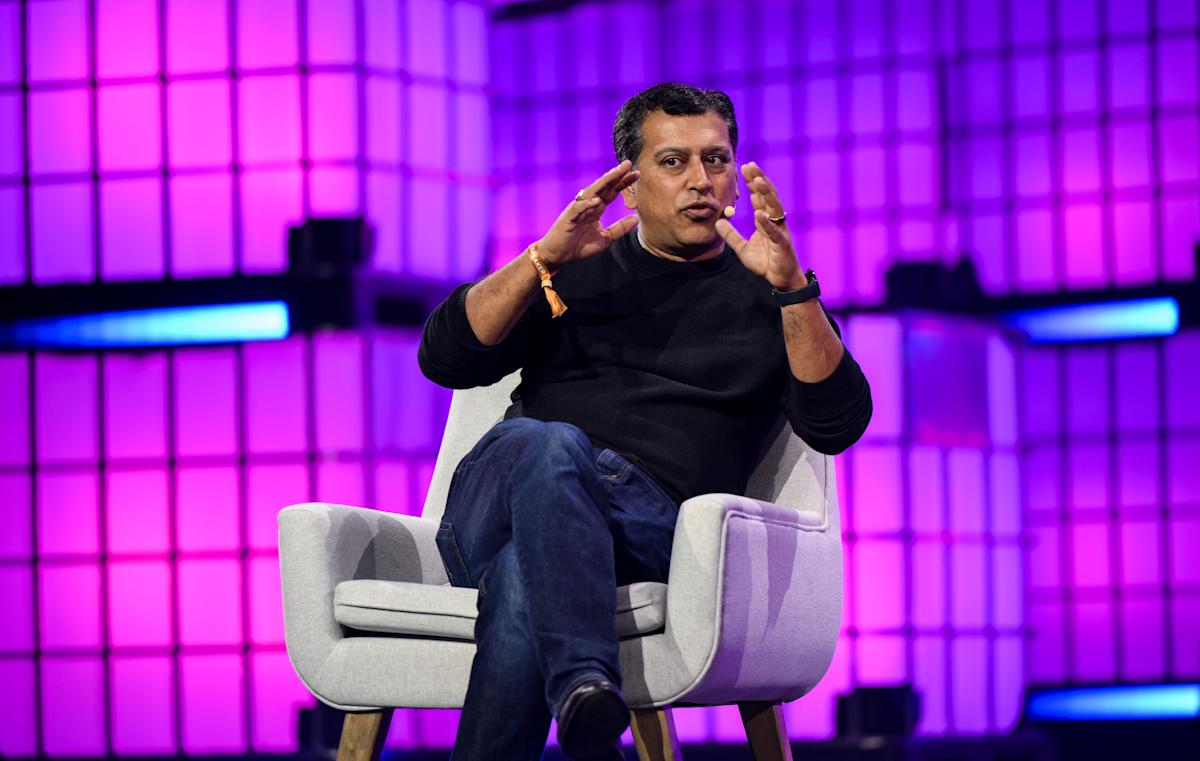
“I don’t view [AI] as a job taker. I view it as a job expander,” Mehrotra told Yahoo Finance. “In my mind, we’re about to give everybody 100 new employees.” He added that the likely result is the workforce is taught to use management skills to oversee digital teams.
It is a bold, and perhaps overly optimistic, rebrand of the AI revolution. But it is one that Mehrotra is betting his entire company on — quite literally. In mid-2025, the writing-assistant giant Grammarly acquired the premium email app Superhuman and then, in a surprising twist, rebranded the entire $13 billion conglomerate under the Superhuman name.
The logic behind the merger was clear. At the time, Grammarly had over 40 million daily users, but Superhuman email client provided the “surface” where professionals spent the bulk of their day. By combining Superhuman’s email app, Grammarly’s writing intelligence, and Coda’s collaborative workspace (another 2025 acquisition), the new Superhuman aims to be the AI-native productivity suite that challenges the dominance of Microsoft (MSFT) and Google (GOOG, GOOGL).
The “100 agents” Mehrotra describes aren’t just fancy chatbots. He visualizes them as digital assistants, designed to pull data from CRMs, summarize support tickets, and draft replies in a user’s specific voice.
In his view, the metric for success isn’t just about how many people use OpenAI’s (OPAI.PVT) ChatGPT, it’s about the volume of background work being done. Grammarly users, he notes, are already triggering over 100 billion LLM calls a week.
However, investors should remain skeptical of the “job expander” narrative. While Mehrotra likens this moment to the introduction of the spreadsheet — where those who learned the tool thrived while calculator users were left behind — the math for the average corporation is different. If every employee suddenly has the output of 100 “agents,” the cynical financial reality is that a company might decide it only needs one manager where it previously needed ten.
“The analogy of employee to managers is a good analogy,” Mehrotra said. “It’s closer to what jobs are going to feel like.”
The alternative is already playing out across the Fortune 500, where a growing list of corporate giants have treated AI as a direct replacement. Fintech giant Klarna (KLAR) reported last year that its AI assistant performed the work of roughly 800 full-time customer service agents, contributing to a workforce reduction of nearly 40%. UPS (UPS), IBM (IBM), and computer giant HP Inc. (HPQ) have announced major job cuts linked to automation.
Leave a Comment
Your email address will not be published. Required fields are marked *