
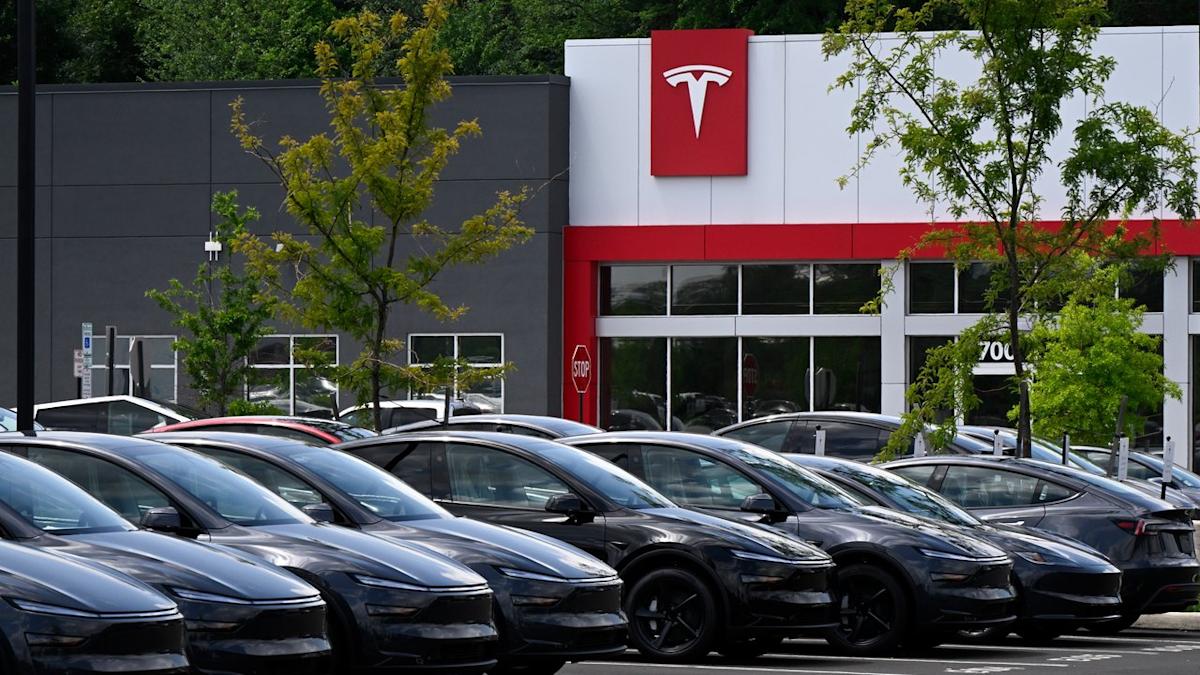

Tesla expected to deliver 15% fewer vehicles in Q4
Tesla’s car sales continue to go in reverse — and the company is taking the unusual route of broadcasting that. Tesla published a compilation of analyst estimates on its website, and the fourth-quarter consensus from 20 firms pegs deliveries at 422,850 vehicles. If that figure holds, it lands roughly 15% below last year’s Q4 result and extends a slow, stubborn theme: Tesla’s growth story, in car units, keeps tripping over the real world.
The story here is less “analysts have an estimate” and more “Tesla chose the estimate.” And it chose a gloomy one. Tesla’s posted average is more pessimistic than Bloomberg’s compiled consensus (of about 445,061 vehicles), and other trackers have been higher, too (in the mid-440,000s range).
So Tesla is setting the bar where it wants the conversation to start: on the floor — and handing everyone a tape measure.
This “soft” fourth quarter is arriving after a year that has looked like three different stories taped together. Tesla delivered 336,681 vehicles in Q1 2025; deliveries rose to 384,122 in Q2; and then, Tesla hit a record in Q3: 497,099 deliveries. Now, the consensus says Q4 gives back a solid chunk of that momentum — and the reason is less about factory choreography or consumer behavior and more about policy gravity.
Federal EV tax credits — $7,500 for new EVs and $4,000 for used — expired on Sept. 30, 2025. And deadlines like that don’t erase short-term demand so much as rearrange it. Buyers who were on the fence get shoved into a single quarter, and the next quarter gets stuck holding the bag. Tesla’s November U.S. sales fell nearly 23% year over year to 39,800 vehicles, according to Cox Automotive data, even after Tesla rolled out cheaper (but still not that cheap) “Standard” versions of the Model Y and Model 3.
CEO Elon Musk has tried to wave away vehicle demand anxiety as a media obsession — “they’re fine, don’t worry about it,” he said in May — even as he later warned investors to brace for “a few rough quarters” in what he called a “weird transition period.” Tesla has been trying to ramp up the conversation about its long-promised robotaxis in Austin, Texas, ahead of Musk’s year-end target for safety-monitor-free rides. With a day to spare, it looks like that prediction’s at least true in testing (and not at the fleet level as Musk has promised): Musk says a “Tesla with no safety monitor” drove him around Austin, and Tesla’s AI lead posted video of an empty front seat.
Zoom out, and the EV market is growing, but unevenly. Global EV registrations rose 6% in November, yet North America fell 42% as the post-credit slump spread. Europe is moving in the opposite direction on adoption — battery-electric vehicles are 17% of EU registrations year-to-date through November. Add in intensifying competition, including cheaper EV options from legacy automakers such as Chevrolet and Ford and expanding Chinese brands overseas, and Tesla’s fourth-quarter setup starts to look structural, not seasonal.
Leave a Comment
Your email address will not be published. Required fields are marked *