
Where Meta’s metaverse vision went wrong

Where Meta’s metaverse vision went wrong

Where Meta’s metaverse vision went wrong

When Mark Zuckerberg rebranded Facebook to Meta (META) in October 2021, the founder and CEO presented the name change as the next step in the company’s evolution as he sought to bring the metaverse to life.

In a press release at the time, the company said, “Meta is moving beyond 2D screens toward immersive experiences like augmented and virtual reality to help build the next evolution in social technology.”

The idea was that users would eventually work and play in interconnected virtual worlds via 3D avatars using full headsets or high-tech glasses.

Five years and billions of dollars later, that vision appears to have crumbled.

On Wednesday, Meta laid off 1,500 workers from its Reality Labs division, which houses its metaverse business, and shuttered three VR game studios. In December, the company put planned third-party VR headsets from ASUS and Lenovo, which were to run on Meta’s VR operating system, on hold, according to Engadget.

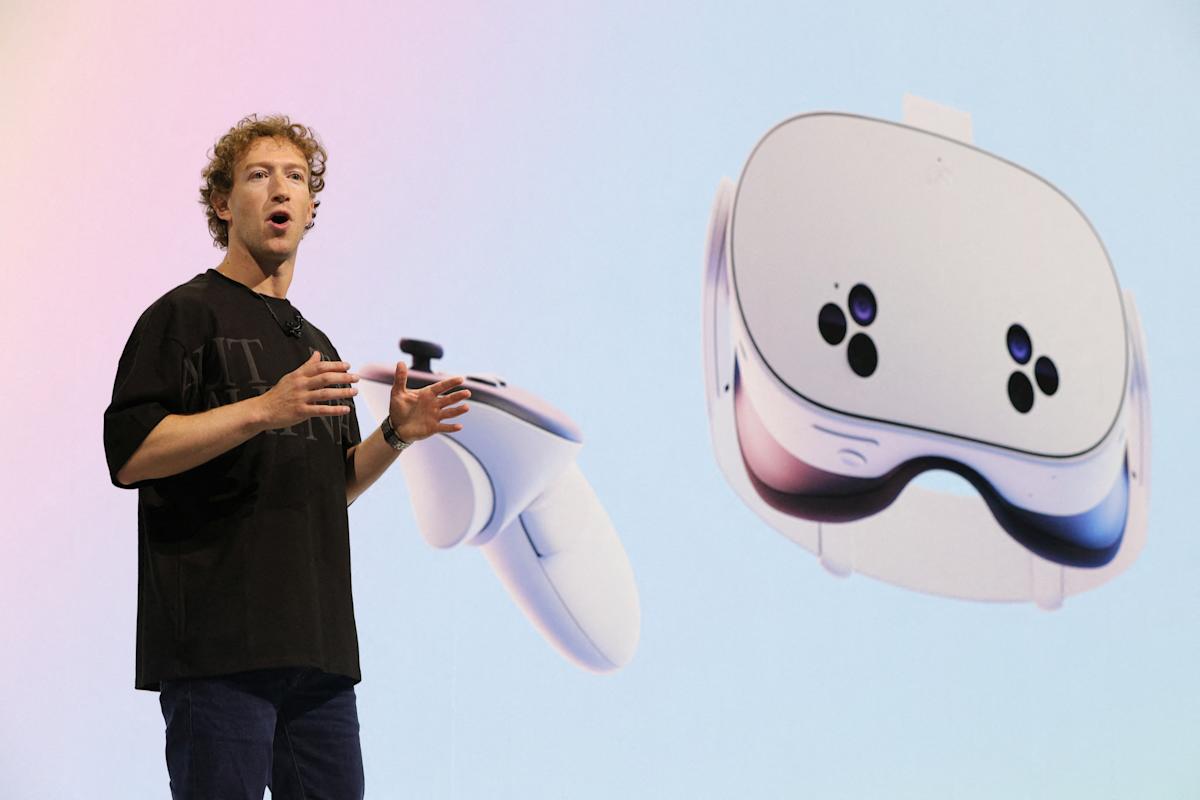
Meta CEO Mark Zuckerberg presents the Meta Quest 3s at the Meta Connect annual event at the company's headquarters in Menlo Park, California, U.S., September 25, 2024. REUTERS/Manuel Orbegozo
Meta CEO Mark Zuckerberg presents the Meta Quest 3s at the company’s headquarters in Menlo Park, Calif., on Sept. 25, 2024. (Reuters/Manuel Orbegozo) · REUTERS / Reuters

Instead of a “Ready Player One”-style future, Meta is moving some of the savings from its cuts to its smart glasses and wearables business.

A lack of long-term interest from consumers and memes about legless avatars and poor graphics didn’t help the effort.

It’s not the end for the metaverse more broadly. And while Meta appears to be moving away from the technology, it still helped the company in its current push toward AI-powered glasses.

Meta’s metaverse strategy was flawed from the jump. Zuckerberg overhyped what consumers could expect from the move, presenting a flashy video that demonstrated the future possibilities of using headsets to communicate with each other via avatars in 3D worlds, like something out of a science fiction novel.

But that’s not what they got.

“It was an amazing sell at the very beginning. But there [were] just so many things that needed to happen for us to see a fully realized metaverse,” IDC research director of mobile devices Ramon Llamas told Yahoo Finance.

“And if you remember that presentation … Zuckerberg himself came out and said, ‘You know … we’re going to have this great thing called the metaverse. We are also relying on a bunch of innovations and developments that have yet to take place.'”

Meta did become one of the biggest sellers of virtual reality headsets thanks to its Quest line of devices, but its Meta Horizon software platform never truly took off among users.

Couple that with unimpressive graphics, which for some time included legless avatars, and it’s easy to understand Meta’s problem.

FILE PHOTO: FILE PHOTO: Meta CEO Mark Zuckerberg wears the Meta Ray-Ban Display glasses, as he delivers a speech presenting the new line of smart glasses, during the Meta Connect event at the company's headquarters in Menlo Park, California, U.S., September 17, 2025. REUTERS/Carlos Barria     TPX IMAGES OF THE DAY/File Photo/File Photo
Meta CEO Mark Zuckerberg wears Ray-Ban Meta Display glasses as he presents the new line of smart glasses at the company’s headquarters in Menlo Park, Calif., on Sept. 17, 2025. (Reuters/Carlos Barria) · REUTERS / Reuters

It doesn’t help that headsets are still rather bulky and uncomfortable to wear for long periods. Even high-end headsets like Apple’s (AAPL) Vision Pro haven’t performed well.

According to Counterpoint Research, global VR headset shipments fell 14% year over year in the first half of 2025.

Even Samsung (005930.KS), which launched its Galaxy VR headset in October, admitted the device represented more of a foundational jumping-off point for the company’s smart glasses initiative.

While its metaverse ambitions may not have lived up to the hype, they did help Meta on its way to developing its popular Ray-Ban Meta smart glasses, as well as its Ray-Ban Meta Display glasses.

Meta is banking on smart glasses serving as the next major computing platform after the smartphone. The hope is that with its own popular hardware, Meta will no longer have to comply with Apple or Google’s (GOOG, GOOGL) app store rules and regulations, which it does now via its smartphone apps.

But Apple, Google, Samsung, XReal, and a slew of other companies are working to catch up to Meta’s lead.

And while Meta may be pivoting away from the metaverse, it doesn’t necessarily mean the concept is finished. According to Gartner analyst Tuong Nguyen, the metaverse isn’t a specific product or platform, but rather a larger trend related to the evolution of the internet.

Nguyen said it’s better to think of the metaverse as the convergence of several new technologies, ranging from headsets and digital displays to smart glasses and more. When it will eventually take off, however, is still unknown.

Sign up for Yahoo Finance's Week in Tech newsletter.
Sign up for Yahoo Finance’s Week in Tech newsletter. · yahoofinance

Email Daniel Howley at dhowley@yahoofinance.com. Follow him on Twitter at @DanielHowley.

Click here for the latest technology news that will impact the stock market

Read the latest financial and business news from Yahoo Finance

Leave a Comment

Your email address will not be published. Required fields are marked *